Raise Them or Buy Them: A Straightforward Economic Analysis of Heifer Replacement Strategies
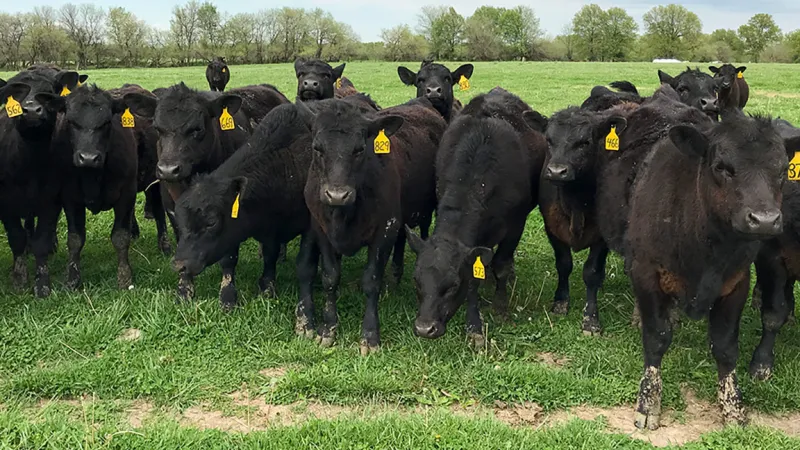
Photo: replacement heifers pasture cattle ranch management, via cd.angus.org
Every commercial cow-calf operation faces the same fundamental question on a recurring basis: when it is time to refresh the cowherd, do you develop your own replacement heifers, or do you source bred females from an established seedstock supplier? It sounds like a straightforward operational decision. In practice, it is a nuanced financial calculation that most producers make based on habit, cash flow convenience, or conventional wisdom rather than a disciplined analysis of actual costs and outcomes.
The honest answer is that neither approach is universally superior. The right strategy depends on variables specific to your operation — and those variables deserve a careful look before you commit to one path or the other.
The True Cost of Developing Your Own Replacements
Producers who retain and develop their own heifers often underestimate the full cost of doing so. The most common error is accounting only for feed inputs while overlooking the substantial indirect costs that accumulate throughout the development period.
A heifer calf retained at weaning represents a significant opportunity cost. That animal could have been sold as a feeder calf at current market prices. On a 550-pound weaner heifer at $1.80 per pound, the foregone revenue at weaning alone is $990. That figure is the starting point of your development investment — not zero.
From weaning through first breeding, a replacement heifer will consume roughly 1,800 to 2,200 pounds of hay equivalent, plus supplemental protein and mineral, depending on your region and forage quality. In the Southern Plains or the Southeast, where winter grazing is limited, those feed costs can reach $350 to $500 per head above what a cow in the main herd would consume during the same period. Add in labor for additional handling, pregnancy checking, and first-calf monitoring, and the all-in cost of developing a heifer from weaning to confirmed pregnancy frequently falls between $1,400 and $1,900 per head in most US production environments.
That number surprises many producers. When compared against the purchase price of a quality bred heifer from a reputable source — typically $1,800 to $2,500 in current markets — the cost advantage of home development is narrower than it appears, and in some scenarios it disappears entirely.
The Case for Retaining and Developing
None of the above is an argument against home development. There are compelling reasons to raise your own replacements, and for many operations, it remains the superior strategy.
Genetic consistency is the most significant advantage. When you retain heifers from your own cowherd, you are selecting animals already adapted to your specific environment — your forage base, your climate, your parasite pressure, your calving season. That environmental fit has real economic value that does not show up on a purchase receipt but manifests in lower culling rates, stronger reproductive performance, and reduced veterinary expense over the animal's productive life.
Cows that were born and developed on your operation tend to exhibit better longevity in that environment than purchased females sourced from different management systems. A cow that stays in your herd for nine productive years rather than six is delivering significantly more value per dollar of development cost, even if that cost was higher upfront.
Biosecurity is another meaningful consideration. Every animal introduced from an outside source carries some degree of disease risk — whether that is BVD, Johne's disease, trichomoniasis, or any number of other conditions that can establish quietly and cause expensive damage before detection. Home-developed heifers eliminate that risk vector entirely.
For operations with excess forage capacity and lower labor constraints, the economics of home development also improve considerably. If your pastures can carry additional stocker-weight animals without meaningful incremental cost, the feed expense associated with heifer development is substantially reduced.
When Purchasing Bred Heifers Makes More Sense
For smaller operations — particularly those running fewer than 75 to 100 cows — the fixed costs of heifer development are spread across too few animals to achieve efficiency. Retaining 15 replacement heifers from a 75-cow herd requires the same management infrastructure, handling facilities, and labor attention as retaining 30 heifers from a 150-cow operation. The per-head economics deteriorate at smaller scale.
Cash flow timing is another factor that favors purchasing in certain situations. Home development ties up capital for 12 to 18 months before a heifer enters the productive cowherd. Purchasing a bred heifer converts that capital directly into a confirmed-pregnant, near-term asset. For operations managing tight liquidity — particularly following drought years or periods of elevated input costs — the cash flow profile of purchasing can be substantially more manageable.
Purchasing also offers an opportunity to introduce superior genetics rapidly. If your cowherd's performance metrics have plateaued and you are seeking to improve weaning weights, marbling, or maternal efficiency, buying bred heifers from a reputable seedstock source with documented genetic merit can accelerate that improvement faster than waiting for a full generation of home-retained replacements to cycle through.
A Decision Framework by Operation Profile
Rather than prescribing a single answer, the following framework provides a starting point for honest self-assessment.
Develop your own replacements if:
- Your operation runs 100 or more cows with adequate forage and handling infrastructure
- Your existing cowherd demonstrates strong reproductive and performance metrics worth replicating
- You have reliable labor and are willing to invest in the management discipline heifer development requires
- Biosecurity is a priority and your herd has a known, clean health history
- You are marketing cull cows and heifers at favorable prices that make retained heifers cost-competitive
Consider purchasing bred heifers if:
- Your operation runs fewer than 75 to 100 cows and per-head development costs are difficult to justify
- You are seeking to introduce new genetics or significantly upgrade a specific performance trait
- Cash flow constraints make a 12 to 18-month capital tie-up problematic
- Your forage base is fully committed during the development period
- You have a trusted seedstock source with transparent health protocols and documented genetic performance
The Hybrid Approach
Many successful operations do not choose exclusively between these two paths. A hybrid model — retaining the top-performing heifers from your own calf crop while supplementing with purchased bred females to fill genetic gaps or address shortfalls in replacement numbers — captures advantages from both strategies.
This approach also provides a natural hedge against the volatility of bred heifer markets. When outside prices are elevated, your home-developed animals carry greater relative value. When markets soften and quality bred heifers become available at attractive prices, purchasing becomes a rational complement to your internal development program.
Making the Decision With Confidence
At LH Cattle Co., we recognize that no two operations face identical circumstances. The rancher running stocker cattle on leased grass in the Flint Hills faces a fundamentally different calculus than the multi-generational cow-calf producer in the Texas Hill Country managing a closed herd with well-documented genetics.
What we consistently recommend is that this decision be made with actual numbers — not assumptions. Calculate your true development cost, including opportunity cost, feed, labor, and facilities. Compare that figure honestly against current bred heifer market values and the genetic quality available from reputable sources. Then make the decision that the arithmetic supports, not the one that habit or convention suggests.
The replacement heifer is the foundation of your future cowherd. The strategy you use to source her deserves the same rigorous analysis you apply to any other significant capital investment in your operation.