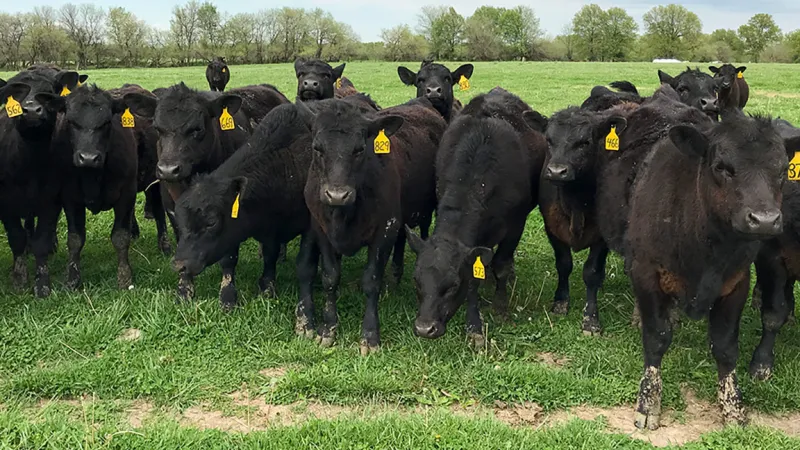
DNA or Dollars Lost: The Financial Case for Genomic Testing in Your Breeding Program
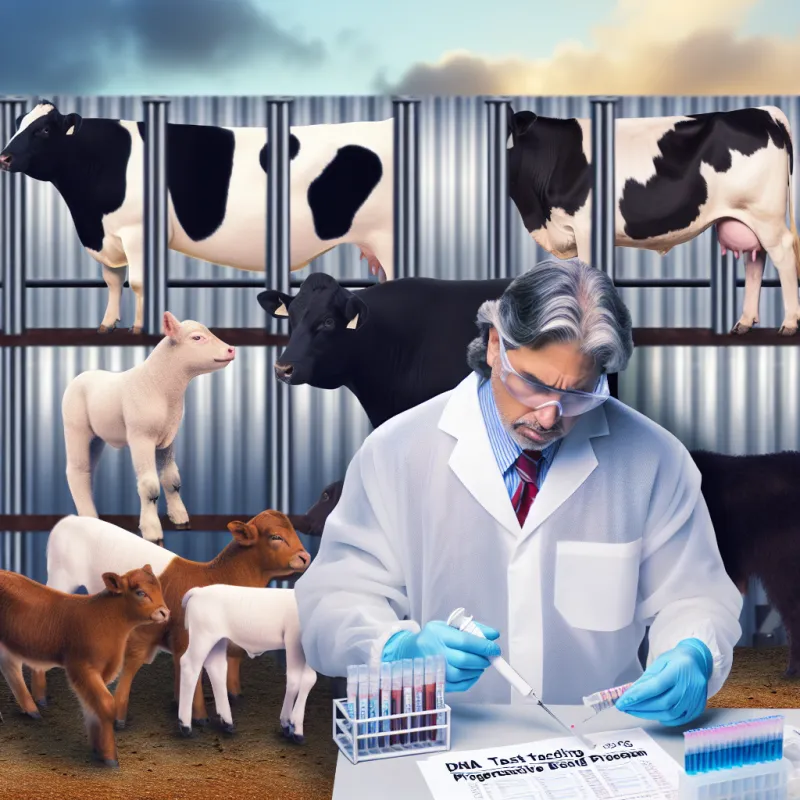
Photo: cattle DNA genomic testing laboratory agriculture, via thefarminginsider.com
For generations, cattle selection relied on the trained eye — frame score, hip structure, a bull's EPD sheet, and the reputation of the seedstock producer selling him. Those tools still carry weight, and no serious rancher should abandon them. But a growing body of evidence, along with straightforward financial analysis, makes one point difficult to ignore: operations that integrate genomic testing into their breeding decisions are outperforming those that do not, and the gap is widening every year.
At LH Cattle Co., we work with producers across a range of operation sizes and philosophies. What we observe consistently is that skepticism about genetic testing rarely stems from a careful review of the numbers. More often, it comes from unfamiliarity with the technology, a concern about upfront cost, or a sense that the traditional approach has always been good enough. This article addresses each of those reservations directly.
What Genomic Testing Actually Measures
Conventional EPDs — Expected Progeny Differences — are calculated from pedigree data and performance records accumulated over years, often requiring multiple calf crops before estimates stabilize. Genomic-enhanced EPDs (GE-EPDs) incorporate direct DNA marker analysis, which allows breeders to capture meaningful accuracy on young animals before they ever produce offspring.
A genomic test scans thousands of single nucleotide polymorphisms (SNPs) across an animal's genome. These markers are statistically associated with economically relevant traits: weaning weight, marbling, milk production, calving ease, feed efficiency, and disease resistance, among others. The result is a predictive profile that carries substantially higher accuracy than pedigree-based estimates alone, particularly in young bulls and replacement heifers where performance history is limited.
For practical purposes, this means a rancher can make a more informed selection decision on a yearling bull or a heifer calf — animals that have not yet had the opportunity to prove themselves through progeny — rather than waiting years for traditional evaluation data to accumulate.
Running the Numbers: A Realistic Cost-Benefit Scenario
Consider a commercial cow-calf operation running 200 cows. The producer retains 40 replacement heifers annually and purchases one or two bulls every two to three years. A single genomic test through a reputable laboratory currently costs between $25 and $45 per animal, depending on the panel selected and the species-specific platform used.
Testing 40 replacement heifers costs approximately $1,000 to $1,800 per year. That figure, viewed in isolation, can feel like an unnecessary line item — especially during years when input costs are already elevated. But consider what that investment is actually purchasing.
If genomic data allows a producer to identify the top 60 percent of those heifers by genetic merit — and cull the bottom 40 percent with greater confidence — the long-term impact on herd quality is substantial. A heifer retained into the cowherd represents a 10- to 15-year genetic influence on that operation. Selecting even modestly superior animals, compounded across a decade of calf crops, translates into measurable gains in weaning weights, carcass quality, and reproductive efficiency.
Research from land-grant universities in the Great Plains consistently demonstrates that genomic selection can accelerate genetic progress by 20 to 30 percent compared to phenotype-only selection in commercial herds. On a 200-cow operation, a 5-pound improvement in average weaning weight across the calf crop — a conservative estimate — represents roughly 1,000 additional pounds of beef at weaning annually. At current feeder calf prices, that differential pays for the testing program many times over.
The Bull Selection Advantage
The financial leverage of genomic testing is perhaps most pronounced in bull procurement. A herd bull influences half the genetics of every calf he sires. On a 25-cow-per-bull ratio, a single bull's genomic profile affects 25 calves per year — and potentially 75 to 100 calves over his productive life in your program.
Traditional EPD selection is valuable, but EPD accuracy on young bulls can be modest, particularly for traits like marbling or feed efficiency where progeny data is sparse. A genomic test on a prospective herd bull elevates the confidence of that selection decision significantly. When a bull represents a $3,000 to $8,000 investment and a multi-year genetic commitment, spending $35 to validate the accuracy of his performance projections is not a luxury — it is basic due diligence.
Furthermore, genomic data can reveal carrier status for inherited conditions such as Arthrogryposis Multiplex (AM), Neuropathic Hydrocephalus (NH), and Osteopetrosis (OS) in Angus-influenced cattle, or equivalent conditions in other breeds. Purchasing a high-EPD bull that later proves to be a carrier of a defect gene is an expensive lesson. A $35 test prevents it.
Common Misconceptions That Hold Producers Back
"Genomic testing is only for seedstock operations." This is perhaps the most persistent misunderstanding in the commercial sector. While seedstock producers were early adopters, the cost reductions and expanded trait panels of the past decade have made genomic testing entirely practical for commercial cow-calf operations. The economics favor it at nearly any scale above 50 cows.
"My traditional EPD selection has always worked." It has — but working and optimizing are not the same thing. Genomic data does not replace EPD analysis; it enhances it. The two tools are complementary, and using both produces better decisions than either alone.
"The technology is too complicated." Submitting a hair or blood sample to a certified laboratory and receiving a report requires no specialized expertise. Most breed associations and genetic testing companies provide straightforward submission protocols and interpretation guides. The barrier to entry is lower than most producers assume.
Building Genomic Data Into Your Annual Program
For operations new to genomic testing, a reasonable starting point is to test all prospective replacement heifers and any bulls under consideration for purchase. Establish a baseline understanding of your cowherd's genetic profile over two to three years. Use that data to set selection thresholds — a minimum genomic-enhanced EPD for weaning weight, for instance, or a marbling benchmark if you market on a grid.
Over time, this data infrastructure becomes a competitive asset. It informs not just which animals to retain, but how to market your calf crop, how to communicate genetic value to buyers, and how to make seedstock purchases that genuinely complement your existing herd profile rather than simply adding name-brand genetics.
The Bottom Line
The ranchers who will define profitable cattle production over the next two decades are not necessarily the ones with the most acres or the largest operations. They are the ones making better decisions — decisions grounded in accurate, actionable data. Genomic testing is one of the most cost-effective data tools available to the modern cattle producer.
At LH Cattle Co., we believe that sound genetics and sound management are inseparable from sound business practice. The laboratory is not a replacement for experience and judgment — but it is a powerful ally to both. The question is no longer whether you can afford to test. It is whether you can afford not to.