Preserving the Work of Generations: A Practical Guide to Protecting Your Herd's Genetic Direction Through Ownership Transitions
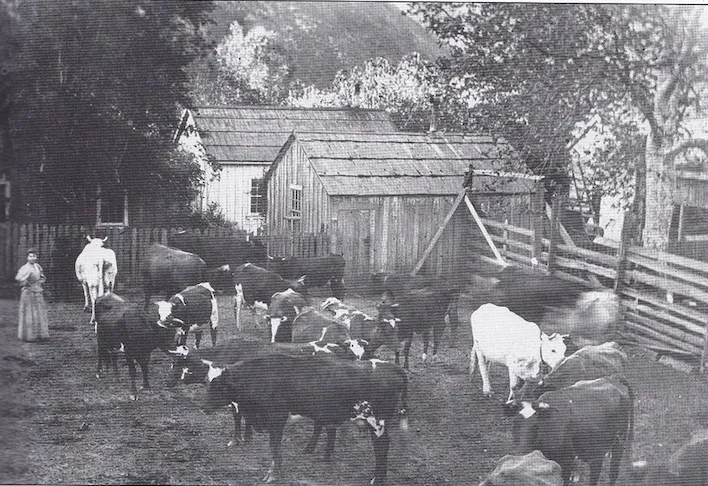
Photo: Unknown authorUnknown author, Public domain, via Wikimedia Commons
The Invisible Asset That Succession Plans Ignore
When a family ranching operation begins the process of transitioning ownership to the next generation, considerable attention is typically devoted to land titles, equipment inventories, tax structures, and operating agreements. These are legitimate and necessary concerns. What frequently receives far less deliberate attention is the genetic direction of the cowherd — the accumulated result of years of selection pressure, culling decisions, and breeding philosophy that defines what the operation actually produces.
This omission is understandable. Genetic direction is not listed on a balance sheet. It does not appear in a deed or a depreciation schedule. Yet it represents, for many serious cattle operations, a form of capital that took longer to build and is harder to replace than any piece of equipment on the property. When that capital is allowed to drift — through inconsistent selection criteria, conflicting priorities between generations, or simply the absence of a documented plan — the consequences compound quietly over years before they become visible in the cattle themselves.
The ranching community across the United States has no shortage of cautionary examples: operations that spent two or three decades developing a consistent, high-performing cowherd, only to see that consistency erode within a single generation because no one wrote down what they were trying to build.
How Genetic Drift Happens During Transitions
Genetic drift in transition scenarios rarely results from deliberate abandonment of a breeding philosophy. More commonly, it emerges from a combination of well-intentioned but uncoordinated decisions made in the absence of clear documentation.
The incoming generation, whether a son, daughter, or other family member, arrives with their own exposure to current industry trends, sale catalog influences, and the natural inclination to put their mark on the operation. Without a clearly articulated framework for what the existing program is trying to achieve and why, those influences can gradually redirect selection decisions in ways that undermine years of accumulated progress.
The problem is compounded when the outgoing generation's knowledge exists primarily in their head rather than on paper. The reasoning behind specific culling decisions, the rationale for the current bull battery, the traits that have been systematically emphasized or avoided over the years — this institutional knowledge is extraordinarily difficult to transfer through conversation alone. It requires documentation.
Additionally, transitions frequently involve periods of divided authority during which neither generation is fully in charge of breeding decisions. Bulls may be selected by one party, replacement heifers retained by another, and culling decisions deferred because of uncertainty about who has final say. This ambiguity is among the most damaging conditions a genetic program can operate under.
The Cost of Undocumented Genetic Vision
The financial consequences of genetic drift during a transition are not immediately apparent in the year they occur. They manifest over the course of a full production cycle — three to five years, at minimum — as the cowherd's consistency begins to erode, weaning weights become more variable, and the predictability that buyers valued begins to fade.
For operations that have built their reputation and their sale premiums on producing a consistent, identifiable type of cattle, this erosion is particularly costly. Buyers who have returned year after year because they know what to expect from your program will begin to hesitate when that consistency disappears. Rebuilding that reputation, once lost, requires the same sustained effort that created it originally — and it cannot be accomplished quickly.
At LH Cattle Co., we have observed that the operations most vulnerable to this outcome are those that have been most successful. The more deliberate and refined the genetic program, the more damage an undocumented transition can do, because there is more accumulated progress to lose.
Building a Genetic Blueprint That Outlasts You
The solution is not complicated in concept, though it requires discipline and honesty to execute well. It begins with the explicit documentation of what your breeding program is designed to produce — not in vague terms, but with specific trait priorities, acceptable EPD ranges, breed composition targets, and a clear articulation of the production environment your cattle are being selected to thrive in.
This document should address several foundational questions. What is the primary market destination for your cattle, and what traits does that market reward? What environmental and management constraints does your operation impose — climate, forage quality, calving season, available labor — and how do those constraints shape your selection criteria? Which traits have you historically prioritized, and which have you deliberately avoided, and why? What is your philosophy on crossbreeding, composite development, or breed purity?
The answers to these questions, assembled into a coherent written document, give the incoming generation a framework for making decisions that are consistent with the program's direction even in situations that were not specifically anticipated. This is fundamentally different from a list of rules — it is a transfer of reasoning, not just instructions.
Documenting the Herd's Current Genetic State
Alongside the philosophical framework, a thorough genetic inventory of the existing cowherd is an essential transition document. This inventory should capture current EPD profiles across the cowherd, the genetic composition of the existing bull battery, the selection criteria applied to the most recent retained heifer crop, and any ongoing genetic trends — both the ones you have intentionally created and any you have been working to correct.
For operations utilizing genomic testing, this documentation is considerably more straightforward, as the data already exists in a structured format. For those relying primarily on visual appraisal and traditional performance records, the documentation effort is more significant but no less important.
The goal is to give the incoming generation a clear picture of where the genetic program currently stands, not just where it is trying to go. Without that baseline, even a well-intentioned new manager cannot make selection decisions that maintain continuity with what was built before them.
Structuring the Transition Itself
Beyond documentation, the structure of the transition period matters considerably. Operations that navigate genetic transitions most successfully tend to share several common practices.
First, they involve the incoming generation in breeding decisions for a meaningful period — ideally two to three years — before full authority transfers. This apprenticeship period allows the institutional knowledge of the outgoing generation to be transmitted through shared experience, which documentation alone cannot fully replicate.
Second, they establish clear decision-making authority at each stage of the transition, so that ambiguity about who has final say on breeding decisions does not create the conditions for drift.
Third, they build in explicit checkpoints — perhaps annually — at which the genetic direction of the program is reviewed against the documented blueprint, allowing course corrections to be made before drift becomes entrenched.
The Legacy of a Well-Run Program
The cattle that carry your genetic program forward are, in a very real sense, a living record of the decisions you made over a career. Protecting that record through a thoughtfully managed transition is not a bureaucratic exercise — it is an act of stewardship toward the work you spent decades building and the people who will carry it forward.
A documented genetic vision, combined with a structured transition process, ensures that the next generation inherits not just the cattle themselves but the understanding required to continue developing them with purpose and consistency. That is a legacy worth planning for.