Reading the Ring: How Auction Data Is Reshaping Genetic Valuations for Serious Cattle Producers
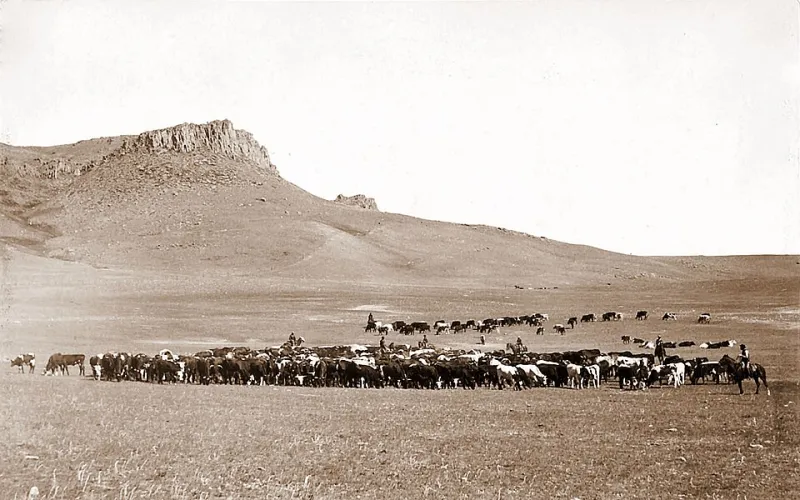
Photo: Geo B Bonnell, Public domain, via Wikimedia Commons
The Sale Barn as a Data Source, Not Just a Destination
For generations, the auction house represented the end of the road — the place where cattle were sold and a check was cut. That perspective, while understandable, leaves an enormous amount of actionable intelligence on the table. The modern sale barn, particularly those operating with digital bidding platforms and publicly accessible price records, now functions as something closer to a commodity intelligence terminal. Producers who treat it as such are making meaningfully better decisions than those who simply show up with cattle and hope for the best.
The shift is not merely technological. It reflects a broader maturation in how serious ranching operations approach the business of genetics. When you understand what the market has historically rewarded — not just last Tuesday, but over rolling twelve- and twenty-four-month windows — you develop a clearer picture of which traits are generating genuine buyer demand and which are receiving only marginal premiums.
What the Bid Pattern Actually Reveals
Most producers review sale results by looking at average prices or top sellers. That is a reasonable starting point, but it stops well short of what the data can tell you. The more instructive exercise is to examine the spread between the top third and the bottom third of comparable lots, then work backward to identify what distinguished the cattle that drew aggressive bidding.
In many cases, those distinctions are not simply about weight. Documented performance records, known EPD profiles, verified health histories, and visual consistency within a pen all influence where bids land. When you track these variables across multiple sales and multiple seasons, patterns emerge. Buyers who return repeatedly and bid confidently on specific genetics are sending a clear signal about what they value — and that signal should inform your own breeding program.
Several regional livestock auction platforms now publish detailed sale reports that go beyond simple price-per-pound summaries. Some provide lot-by-lot breakdowns that include buyer activity, bidding increments, and re-sale history for repeat consignors. Producers who mine this data consistently are, in effect, conducting ongoing market research at no cost beyond the time invested.
Historical Pricing and the Genetics Premium
One of the more powerful applications of auction data is identifying the consistent premium that documented genetics command over undocumented cattle in comparable condition. This premium is not static — it fluctuates with market cycles, regional demand, and the broader cattle inventory picture — but it is almost always present to some degree.
Understanding the magnitude of that premium in your specific region and sale environment allows you to make a straightforward calculation: does the cost of genetic documentation, performance testing, and EPD verification justify itself through the price differential you can expect at sale time? For most serious operations, the answer is clearly affirmative. But the value of tracking that data over time is that it removes the guesswork and replaces it with a defensible financial case.
At LH Cattle Co., we have observed this dynamic across a wide range of market conditions. Cattle with a coherent, documented genetic story consistently attract more competitive bidding than comparable animals whose background is opaque. The auction ring, in this respect, is simply reflecting what informed buyers already know.
Transparency Tools and the Shift in Negotiating Power
The emergence of online bidding platforms, real-time price broadcasting, and searchable sale archives has meaningfully altered the balance of information between buyers and sellers. A decade ago, a producer consigning bulls to a regional sale had limited visibility into what comparable genetics had brought at other venues in recent weeks. Today, that information is often accessible with modest effort.
This transparency cuts both ways. Sellers who understand prevailing market conditions can price their cattle with greater confidence and resist pressure to accept below-market offers. Buyers who track the same data can identify when a consignor is asking a premium that the broader market does not support. The net effect is a more efficient market — one that rewards preparation and penalizes complacency.
For producers who are purchasing breeding stock rather than selling it, auction data serves as an essential reality check. Before committing to a significant bull purchase, reviewing what similar genetics have brought across multiple recent sales provides a benchmark against which to evaluate the asking price. If a seller's valuation significantly exceeds what the market has demonstrated, the burden of proof rests with the seller to explain why.
Building a Systematic Tracking Practice
The producers deriving the most value from auction data are not doing so casually. They have established systematic practices for collecting, organizing, and reviewing sale information on a regular basis. This does not require sophisticated software, though purpose-built tools are available for operations that want them. A disciplined spreadsheet maintained over several years can yield genuinely valuable insights.
The variables worth tracking include sale date and location, average and median prices by category, top-end prices and the characteristics of those lots, weather and seasonal conditions that may have influenced attendance or cattle condition, and any notes on buyer composition — particularly whether commercial producers, seedstock operations, or export buyers were active participants.
Over time, this record becomes a proprietary market intelligence asset. It allows you to anticipate seasonal price patterns, time consignments strategically, and evaluate whether your own genetic program is keeping pace with what the market is rewarding.
Connecting Market Intelligence to Breeding Decisions
The ultimate purpose of tracking auction data is not to become a more sophisticated seller — though that is a legitimate benefit. It is to make better decisions about which genetics to develop and retain within your own program. When the market consistently rewards specific trait combinations, that is meaningful feedback about where your breeding investment should be directed.
This feedback loop, when taken seriously, creates a virtuous cycle. Better-informed breeding decisions produce cattle that align more closely with verified buyer demand, which generates stronger sale results, which funds further genetic investment. Ranchers who treat auction data as a passive historical record miss this dynamic entirely. Those who engage with it actively are, in effect, conducting ongoing market research that directly informs the genetic direction of their operation.
The sale barn has always contained more information than most producers have chosen to extract from it. The tools now available make that extraction far more practical than it has ever been. The advantage belongs to those willing to do the work.