Shrink Is Stealing From You: How Water Access, Feed Timing, and Facility Design Are Quietly Eroding Your Annual Revenue
Most ranchers track feed costs, veterinary bills, and bull acquisition expenses with careful attention. Yet one of the most persistent margin destroyers on American cattle operations rarely appears as a line item anyone scrutinizes with equal rigor. Cattle shrink — the loss of body weight that occurs during handling, transport, holding, and environmental transitions — is silently compounding across your operation every single year. And in most cases, a significant portion of it is entirely preventable.
At LH Cattle Co., we work with producers who are serious about building operations that perform at the highest level. Understanding shrink not as an inevitable cost of doing business, but as a correctable inefficiency, is one of the most important mindset shifts a rancher can make.
What Shrink Actually Means — and Why It Compounds
Shrink occurs in two forms. Excretory shrink is the rapid loss of gut fill — the water, feed, and digestive contents that cattle shed almost immediately when they are stressed, moved, or denied access to feed and water. This can account for 3–6% of live weight within the first several hours of handling alone. Tissue shrink, by contrast, represents actual loss of muscle and fat mass, and it develops more slowly under sustained nutritional stress or poor environmental conditions.
While excretory shrink is partially recoverable once cattle are returned to normal conditions, tissue shrink is not. It represents real production that is permanently lost. When you multiply even a modest 2% tissue shrink event across a herd of 300 cows at an average weight of 1,200 pounds and a live weight price of $1.50 per pound, you are looking at more than $10,800 in vanished value from a single suboptimal seasonal transition. That number scales quickly on larger operations.
The Water Infrastructure Problem Most Ranchers Underestimate
Adequate water access is the single most critical variable in controlling shrink, and it is the one most frequently compromised by outdated or undersized infrastructure. The general recommendation is that mature beef cattle require between 30 and 50 gallons of water per head per day under warm conditions, with that figure rising significantly during summer heat. When water sources are insufficient — whether due to low-output wells, poorly distributed troughs, or competitive pressure at limited watering points — cattle begin mobilizing body reserves earlier than they should.
The facility design problem is equally important. Many operations place water sources at distances that discourage frequent drinking, particularly in pastures where dominant animals monopolize access points. Research from land-grant universities across the Great Plains consistently shows that cattle with adequate, evenly distributed water access maintain condition more effectively, cycle more reliably, and wean heavier calves. The cost of adding a supplemental trough or extending a waterline is almost always recovered within a single production cycle.
Before any seasonal transition or planned sale period, audit your water infrastructure honestly. Ask whether every animal in every paddock has reliable, low-competition access to clean water at all times. If the answer is anything less than a confident yes, you have an addressable margin leak.
Feed Timing Is Not a Soft Variable
Inconsistent feeding schedules create a physiological stress response in cattle that most producers do not fully appreciate. Cattle are creatures of strong routine. When feeding times shift unpredictably — whether due to labor scheduling, equipment issues, or poor operational planning — animals experience elevated cortisol levels that directly suppress feed efficiency and accelerate weight loss.
This is particularly damaging during the 30–60 days prior to a marketing event. Cattle that arrive at a sale barn in a chronically stressed metabolic state will shrink more aggressively during transport and will recover more slowly in the feedlot, both of which are reflected in the price a buyer is willing to pay. Savvy order buyers read the condition and temperament of incoming cattle carefully. Animals that show the hallmarks of poor pre-sale management — rough hair coats, sunken flanks, nervous dispositions — attract discounts that rarely feel fair to the seller but are entirely rational from the buyer's perspective.
Standardizing feeding schedules is a low-cost operational discipline that pays consistent dividends. It requires management commitment more than capital investment, which makes it one of the highest-return improvements available to most operations.
Facility Design as a Profit Variable
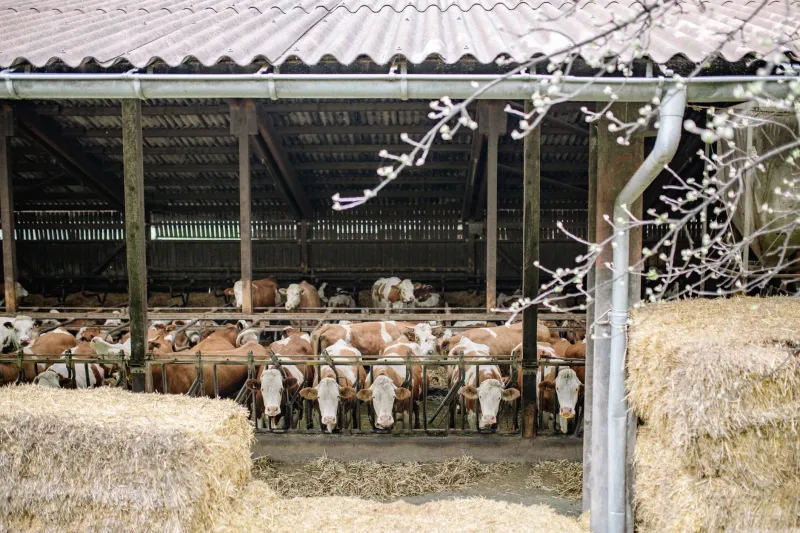
The layout and condition of your working facilities — including loading chutes, holding pens, alleyways, and shade structures — have a direct and measurable impact on how much weight your cattle lose every time they are handled. Poorly designed facilities force cattle into unnatural movement patterns, create bottlenecks that extend handling time, and generate the kind of sustained stress that accelerates both excretory and tissue shrink.
The principles of low-stress livestock handling, developed and refined over decades by researchers and practitioners across the American cattle industry, are not simply about animal welfare — though that matters too. They are fundamentally about protecting the economic value of your livestock. Cattle that move through well-designed facilities calmly and efficiently experience dramatically less shrink than animals that are rushed, crowded, or forced to navigate confusing or frightening layouts.
Key facility investments worth evaluating include:
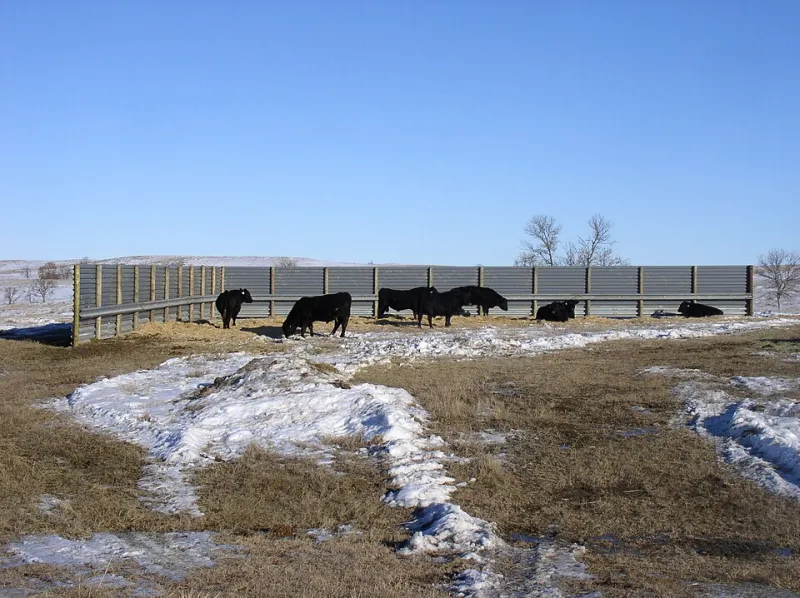
- Covered holding areas that reduce sun and wind exposure during processing or pre-shipment staging
- Curved alleyways and solid-sided chutes that minimize visual disturbances and reduce balking
- Properly sized pen space that prevents overcrowding, which elevates stress hormones and accelerates weight loss
- Water access within holding pens, ensuring that animals can rehydrate before and after processing events
Each of these improvements reduces the physiological burden on your cattle during handling, which translates directly into pounds retained and dollars recovered.
Calculating the Recovery Opportunity
Consider a straightforward scenario. A 400-head commercial cow-calf operation markets approximately 350 calves annually at an average weaning weight of 550 pounds. At current prices, each pound of calf weight carries significant value. If suboptimal pre-weaning water access, inconsistent feeding schedules, and poor facility design contribute to a combined shrink loss of just 4% across the marketing process, that operation is surrendering roughly 22 pounds per calf — or approximately 7,700 pounds of total production annually.
At $1.80 per pound, that represents $13,860 in recoverable revenue. Infrastructure improvements addressing the primary contributors to that shrink — extended waterlines, a covered holding pen, and a facility layout consultation — might carry a one-time cost of $8,000 to $12,000. The payback period, in most cases, is less than twelve months.
This is the framework through which serious producers should evaluate infrastructure spending. It is not an expense line. It is a capital allocation decision with a quantifiable return.
The Discipline of Treating Infrastructure as Investment
American ranching has a long tradition of deferred maintenance and minimal infrastructure spending, born of necessity during the lean years that have marked this industry's history. That discipline served a purpose. But in today's margin environment — where input costs remain elevated and price volatility is a permanent condition — the operations that will endure and prosper are those that treat every recoverable inefficiency as an obligation to address.
Shrink management is not glamorous. It does not generate the same conversation as genetics or market timing. But it is consistent, it is calculable, and it is correctable. At LH Cattle Co., we believe that building a superior cattle operation means attending to every variable within your control — including the ones that do not announce themselves loudly on a profit-and-loss statement.
Start with your water infrastructure. Standardize your feeding schedule. Walk your facilities with fresh eyes and honest intent. The pounds you recover may be the most valuable ones you ever produce.