From Grass to Profit: The Financial Case for Rotational Grazing on Your Ranch
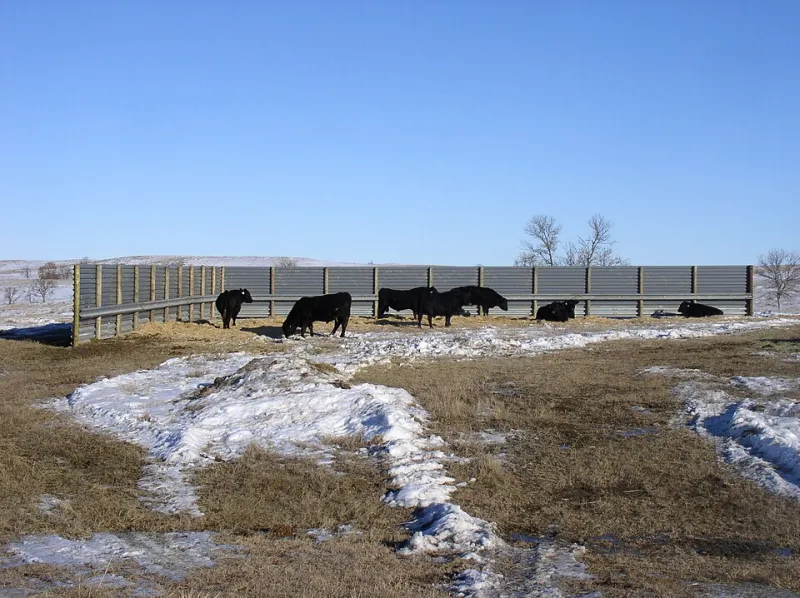
Photo: USDA NRCS South Dakota, Public domain, via Wikimedia Commons
For generations, American ranchers have understood that the land is the foundation of the business. Yet the method by which cattle interact with that land—specifically, how long they graze a given area and when they return to it—has a quantifiable effect on your bottom line that many producers have yet to fully appreciate. Rotational grazing, when implemented with discipline and sound planning, is not merely a conservation practice. It is a profit-driving management tool.
At LH Cattle Co., we have observed firsthand how thoughtful pasture rotation transforms land productivity and herd performance. This analysis examines the economic mechanics of rotational grazing systems, the infrastructure investment required, and the real-world returns that ranches across the country are achieving.
Understanding the Core Economic Premise
Continuous grazing—the practice of allowing cattle unrestricted access to a single pasture—gradually degrades forage quality, compacts soil, and diminishes carrying capacity over time. The financial consequence is straightforward: as grass thins and nutrition declines, supplemental feed costs rise, conception rates may suffer, and weaning weights often stagnate.
Rotational grazing interrupts this cycle by dividing available acreage into smaller paddocks and moving cattle through them on a structured schedule. The resting paddocks recover, root systems deepen, organic matter accumulates, and forage density increases. Over a three-to-five-year horizon, many ranchers report carrying capacity improvements ranging from 20 to 40 percent on the same acreage—without a single additional acre purchased.
When carrying capacity increases, your fixed costs—land payments, property taxes, equipment depreciation—are distributed across more animal units. The result is a lower cost per head and an improved profit margin per pound sold.
Infrastructure Investment: What It Costs and When It Pays Back
The most common objection to rotational grazing is the upfront cost of fencing and water infrastructure. This concern is legitimate and deserves honest examination.
A basic rotational system on a 500-acre ranch typically requires the installation of interior cross-fencing to create four to eight paddocks, along with reliable water access in each paddock. Depending on terrain, soil type, and whether permanent or temporary electric fencing is used, initial infrastructure costs on a property of this size commonly range from $15,000 to $45,000.
That figure sounds significant until it is weighed against the alternative. A ranch spending $80 per head monthly on supplemental hay and protein tubs to compensate for degraded pasture—across a herd of 150 cows—is spending $12,000 every single month on inputs that a productive pasture could largely replace. In this context, a $30,000 fencing investment that reduces supplemental feed dependence by even 40 percent can achieve a full return within two to three grazing seasons.
For smaller operations under 200 acres, the investment threshold is proportionally lower, and temporary electric fencing systems—often costing under $5,000 to establish—can replicate many of the benefits of permanent infrastructure with greater flexibility.
Comparing Rotation Models by Ranch Size
Not all rotation systems are built alike, and the appropriate model depends heavily on herd size, acreage, rainfall patterns, and management capacity.
Four-Paddock Systems are the entry point for most ranchers transitioning away from continuous grazing. Cattle rotate through four equal sections, with each paddock receiving roughly 21 days of rest during a standard grazing season. This model is well-suited to operations between 100 and 400 acres and requires the least intensive management oversight.
Eight-to-Twelve Paddock Systems are commonly adopted by mid-size operations in the 500-to-1,500-acre range. These systems allow for longer rest periods—often 45 to 60 days—which promotes deeper root development and higher forage yield per acre. University of Missouri Extension research has documented forage production increases of up to 35 percent on operations transitioning from continuous to multi-paddock systems within the first four years.
Adaptive Multi-Paddock (AMP) Grazing, practiced on larger ranches across Texas, Nebraska, and the Flint Hills of Kansas, involves high stock density in small areas for very short durations—sometimes as brief as one to three days per paddock. This mimics the historic movement patterns of bison herds and can produce dramatic soil health improvements. The management intensity is considerably higher, but documented results on operations like the Singing Prairie Ranch in South Dakota have shown per-acre forage production doubling over a decade.
The Feed Cost Equation
Feed and forage represent the largest single expense category for most cow-calf and stocker operations in the United States, frequently accounting for 50 to 60 percent of total production costs. Any management system that meaningfully reduces reliance on purchased feed while maintaining or improving animal performance is, by definition, a financial improvement.
Ranchers who implement structured rotation consistently report reduced hay consumption during the grazing season, primarily because healthier pastures extend the grazing window on both ends of the calendar year. In the Southern Plains, well-managed rotational pastures have been documented to extend the grazing season by three to six weeks compared to continuously grazed counterparts. At an average hay cost of $180 per ton and a consumption rate of 30 pounds per cow per day, even a four-week extension of the grazing season on a 200-cow operation represents a feed cost reduction exceeding $15,000 annually.
Herd Health and Its Economic Dimension
The financial benefits of rotational grazing extend beyond forage production. Cattle on well-managed rotational systems typically exhibit lower parasite loads, as the rest periods break internal parasite life cycles that depend on continuous fecal contamination of grazing areas. Veterinary costs and deworming inputs can decline meaningfully—a factor that is easy to overlook but accumulates substantially over a multi-year period.
Additionally, improved nutrition from higher-quality forage tends to support better reproductive performance. A one-to-two-percentage-point improvement in conception rates on a 150-cow herd translates directly into additional calves weaned, which is the most straightforward revenue driver in a cow-calf enterprise.
Long-Term Land Value and Sustainability
Beyond the annual profit-and-loss statement, rotational grazing builds an asset: healthier, more productive land. Ranches with documented histories of sound grazing management command premium valuations in today's agricultural land market. Lenders and conservation program administrators—including USDA EQIP, which offers cost-share assistance for fencing and water infrastructure—increasingly recognize the long-term value of managed grazing systems.
For the rancher with a generational perspective, the compounding value of improved soil organic matter, reduced erosion, and sustained carrying capacity represents a legacy investment that no commodity price cycle can diminish.
Putting the Numbers to Work
The economics of rotational grazing are not theoretical. They are documented on working ranches from the Nebraska Sandhills to the Georgia Piedmont. The initial investment is real, the management commitment is genuine, and the returns—measured in lower feed costs, healthier cattle, improved conception rates, and appreciating land—are equally real.
At LH Cattle Co., we believe that the most profitable ranch is one built on productive land and well-managed resources. Rotational grazing is among the most reliable tools available to achieve that outcome. The question is not whether the numbers work—they do. The question is how soon you are prepared to put them to work on your operation.
