Lifetime Value Over Novelty: Why Culling Your Best Cows Too Soon Is Quietly Draining Your Ranch

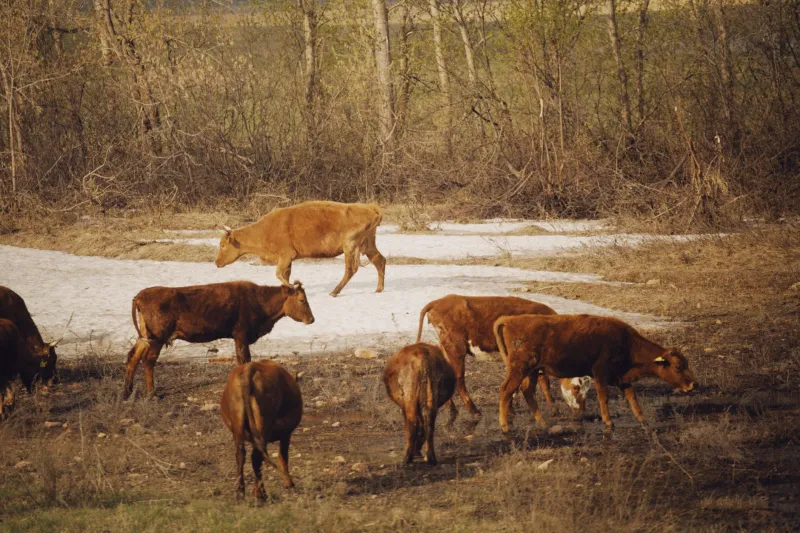
Photo by Photo by Roger Starnes Sr on Unsplash on Unsplash
There is a persistent temptation in cattle ranching to treat the cowherd as a revolving door. New genetics emerge every season. Sale catalogs arrive thick with promise. And somewhere in the background, the belief persists that fresher is better — that aggressive replacement strategies signal a progressive, forward-thinking operation. In practice, however, the numbers rarely support that assumption. For many American ranchers, premature culling is a slow, quiet leak in an otherwise sound operation, one that never shows up as a single line item but compounds year after year into a meaningful drag on profitability.
At LH Cattle Co., we work with producers at every scale, and one of the most consistent patterns we observe is the undervaluation of the proven female. The cow who has demonstrated her worth — consistent conception, sound feet and legs, strong maternal instincts, weaned calves that perform — is frequently moved out of the herd before she has finished delivering the return on the investment that created her.
The True Cost of a Replacement Female
Before evaluating whether to cull a cow, a producer must honestly account for what it costs to replace her. This is where many operations miscalculate.
A replacement heifer, whether purchased or developed internally, carries substantial embedded costs. Development expenses for a home-raised heifer — feed, veterinary care, reproductive management, and the opportunity cost of the pasture she occupies — routinely run between $1,200 and $1,800 depending on region, forage conditions, and input prices. A purchased bred heifer in today's market can exceed $2,500 to $3,500 in many parts of the country.
Beyond acquisition cost, the replacement female does not immediately perform at the level of a mature cow. First-calf heifers wean lighter calves on average, experience higher rates of dystocia, and require more intensive management. Research from land-grant universities has consistently shown that a cow reaches her peak productive efficiency somewhere between her third and sixth calf — meaning the early years of her tenure are, in a sense, an investment period rather than a profit period. Culling a cow before she reaches that productive peak means absorbing the investment cost without capturing the full return.
What a Proven Cow Is Actually Worth
Consider a cow who has reached her fourth or fifth calf. She has demonstrated her fertility — she breeds back reliably on a defined schedule. She has proven her maternal ability — her calves are weaned at or above herd average. She is structurally sound, moves efficiently across pasture, and requires no extraordinary veterinary intervention. This animal represents something genuinely valuable: verified, demonstrated performance in your specific environment, on your specific forage, under your specific management.
That last point deserves emphasis. EPDs and genomic data provide powerful predictions, but they are predictions. The proven cow is a result. She has already filtered through the uncertainty that every heifer and young cow carries. Replacing her with a heifer — regardless of how impressive that heifer's genetic profile appears on paper — means accepting a return to uncertainty.
A useful framework is to calculate the expected remaining productive years of a cow against her annual net contribution. A five-year-old cow in good body condition, with a clean reproductive history and no structural concerns, can reasonably be expected to remain productive through age ten or eleven under sound management. That represents five to six additional calf crops. At a conservative weaned calf value of $900 to $1,100 per calf, the remaining lifetime value of that cow is substantial — often in excess of $5,000 to $6,000 in gross calf revenue, before accounting for her own salvage value at the end of her productive life.
Where the Industry Gets It Wrong
The cattle industry's enthusiasm for genetic improvement is well-founded, but it has occasionally produced a distorted view of replacement strategy. The implicit assumption in aggressive culling programs is that newer genetics are always superior, and that the performance gap between a proven cow and a genetically superior replacement is large enough to justify the transition cost. In many cases, that assumption does not hold.
Genetic improvement in beef cattle, while real and measurable, is incremental on an annual basis. The average genetic trend for weaning weight improvement across major breed associations runs in the range of one to three pounds per year. For a cow who is otherwise productive and sound, the genetic advantage represented by a replacement heifer is often marginal — and is rarely sufficient to offset the cost differential between retaining a proven producer and replacing her.
There are, of course, legitimate reasons to cull. Reproductive failure, structural unsoundness, chronic health issues, and temperament problems are all valid grounds for removal. The concern is not with disciplined, data-driven culling decisions. The concern is with culling driven by novelty, by the appeal of new genetics, or by an arbitrary age threshold that ignores individual cow performance.
A Tale of Two Strategies
Consider two hypothetical operations of similar size, each running 150 cows. Operation A maintains an aggressive 20 percent annual replacement rate, consistently moving out cows at or before age eight regardless of individual performance. Operation B targets a 12 to 14 percent replacement rate, retaining cows who meet defined performance benchmarks through age ten or eleven, and culling only on the basis of documented deficiencies.
Over a ten-year period, Operation A will have replaced its entire cowherd nearly twice over. It will have incurred substantially higher heifer development or purchase costs, managed a consistently higher proportion of first- and second-calf females, and sacrificed the accumulated performance data that a stable, proven cowherd provides. Operation B, by contrast, will carry a higher proportion of cows in their peak productive years, benefit from lower per-head replacement costs, and wean a more consistent calf crop — because its cow base has already been filtered for performance.
The financial difference between these two strategies, modeled over a decade, can easily reach into the six figures for a mid-sized commercial operation. That is not a trivial gap.
Building a Retention Framework
The practical solution is not to stop culling — it is to cull with discipline and intention rather than habit or assumption. A sound retention framework begins with individual cow records. Body condition scores, weaning weights, conception dates, and veterinary history should all be tracked at the individual level. Cows who consistently perform above herd average on these metrics deserve a strong presumption in favor of retention.
Age alone is a poor culling criterion. A nine-year-old cow with a clean record and a sound body deserves a different conversation than a nine-year-old who has missed two breeding seasons and weaned below-average calves. The data should drive the decision.
At LH Cattle Co., we encourage producers to think of the cowherd not as a static snapshot but as a portfolio — one that should be actively managed to retain its highest-performing assets for as long as those assets continue to deliver. The temptation to constantly refresh that portfolio with new genetics is understandable, but it must be weighed honestly against the cost of what is being removed.
Your best cows are not just productive animals. They are proven investments. Give them the opportunity to finish paying out.