Selling Blind: How Cattle Markets Conceal True Value and What Every Rancher Can Do to Reclaim It
There is a particular kind of frustration that every experienced rancher recognizes: you've invested in superior genetics, managed your pastures carefully, maintained rigorous health protocols, and delivered cattle that are objectively better than what the ring beside yours is offering. Yet when the hammer falls, the price difference is negligible. Sometimes there is no difference at all.
This outcome is not random, and it is not simply the market being the market. It is the predictable result of a price discovery system that is structurally designed to favor buyers over sellers—and that rewards information over quality alone. Understanding this dynamic does not require cynicism about the auction process. It requires clarity about how markets actually function and the discipline to position your operation accordingly.
What Price Discovery Actually Means in a Cattle Market
In economic terms, price discovery is the process by which buyers and sellers arrive at a transaction price that reflects the true value of a good. In a perfectly functioning market, that price accounts for all relevant information: quality, supply, demand, timing, and future utility. Cattle markets, however, are rarely perfect.
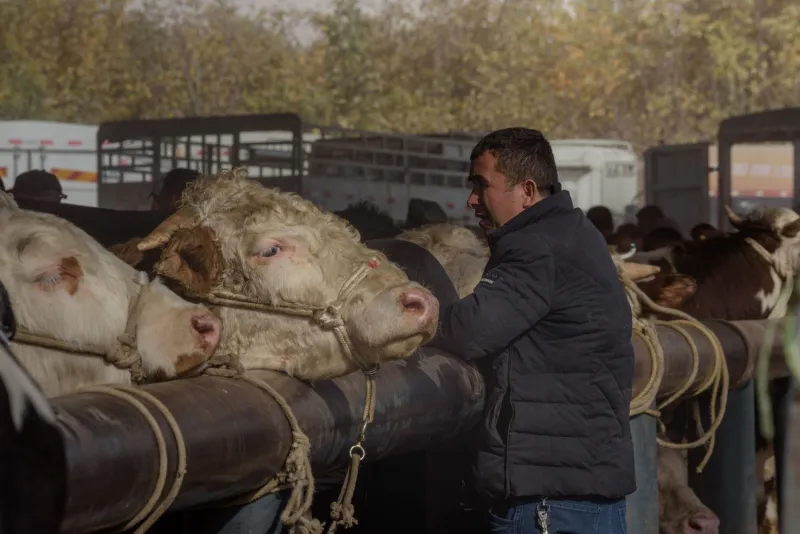
Conventional auction environments compress this process into seconds. A buyer standing at the rail has a fraction of a minute to evaluate each lot, a mental ledger of what he has already purchased that morning, and a risk tolerance shaped by uncertainty about what the next hour will bring. Under those conditions, buyers default to conservative bids. The safest move for a buyer is to undervalue—never to overpay. The structural incentive of the auction format thus runs directly counter to the seller's interest.
The rancher who understands this is not at the mercy of that dynamic. The rancher who does not is funding the buyer's margin.
The Three Places Ranchers Leave Money Behind
Timing without strategy. Many producers bring cattle to market based on when they are ready to sell rather than when buyers are ready to pay. Feeder cattle prices follow seasonal patterns that are well documented and largely predictable. Fall runs flood the market with calves weaned off summer grass, compressing prices precisely when the largest volume of sellers arrives. Producers who wean early, background their calves through the winter, and sell into lighter spring supply frequently capture meaningfully better prices for cattle that have also added weight and condition. Timing is a tool that most ranchers use passively, if at all.
Lot presentation and uniformity. Buyers pay for predictability. A uniform lot of cattle—consistent in frame, color, weight, and background—commands a premium because it reduces the buyer's risk. A mixed lot forces the buyer to price toward the lowest common denominator. Ranchers who blend genetic lines without attention to phenotypic consistency, or who combine cattle from multiple age groups into a single lot for convenience, are effectively asking buyers to penalize them. Sorting, backgrounding, and presenting uniform groups is not cosmetic—it is a pricing strategy.
Documentation asymmetry. In most conventional auction settings, the buyer knows more about what your cattle are worth in the feedlot than you do. Large commercial buyers have sophisticated closeout data. They know average daily gain expectations, feed conversion ratios, and historical carcass performance for specific genetic types. The seller, in most cases, offers none of this. Producers who can present verified health records, documented breeding information, genomic test results, or even anecdotal closeout data from previous buyers shift the information balance. They give buyers a reason to bid with confidence rather than caution.
Alternative Channels Deserve Serious Consideration
The conventional auction is a useful tool, but it is not the only tool, and for premium cattle, it is frequently not the best one.
Private treaty sales allow the seller to control the conversation. You set the asking price, you choose the buyer, and you negotiate on your own timeline. For seedstock producers and those marketing superior commercial cattle, private treaty removes the auction's structural bias against sellers. It requires more effort—building buyer relationships, marketing your operation, and being willing to hold cattle if the price is not right—but the margin improvement can be substantial.
Direct-to-buyer relationships with feedlots or stocker operators offer another path. A feedlot manager who has run your cattle and seen strong closeouts will pay more for the next group than a stranger bidding blind at a sale barn. These relationships take years to build and require consistency to maintain, but they represent one of the most reliable forms of price premium available to a commercial producer. Your reputation, in this context, is a financial asset with a measurable dollar value.
Video and online auction platforms have expanded significantly over the past decade and deserve consideration for ranchers marketing in volume. These formats allow buyers from across the country to compete for your cattle without the geographic limitation of a local auction, which can be particularly valuable for producers in regions with thin buyer attendance. Presentation quality matters enormously in these formats—accurate weights, verified health documentation, and clear video of the cattle are non-negotiable for capturing competitive bids.
Building the Information Advantage
The rancher who consistently captures top-of-market prices is not simply raising better cattle—though that matters. He or she is also managing information strategically. This means maintaining records that can be shared with prospective buyers, investing in genetic documentation that verifies what you are claiming about your herd, and understanding the market well enough to choose the right channel for each class of cattle.
At LH Cattle Co., we believe that the work done in the pasture and the breeding pen deserves to be rewarded at the point of sale. That reward rarely arrives automatically. It is earned through the same discipline that goes into every other aspect of a well-managed operation: preparation, knowledge, and a refusal to leave value on the table because the system makes it convenient to do so.
The Rancher's Obligation to Himself
The auction barn is not your adversary. Buyers are not your adversaries. But the information gap between what you know about your cattle and what a buyer can verify in thirty seconds at the rail is a real and costly problem—one that only you can close.
Start by tracking where your cattle go and what they do when they get there. Invest in documentation that travels with your animals. Be deliberate about timing and lot composition. And consider whether the convenience of the conventional auction is worth the price discount you may be accepting without realizing it.
Price discovery does not have to be a process that happens to you. For the rancher willing to engage it with intention, it can become a competitive advantage.