The Compounding Cost of Keeping Average: Why Removing Middling Genetics May Be Your Most Profitable Decision
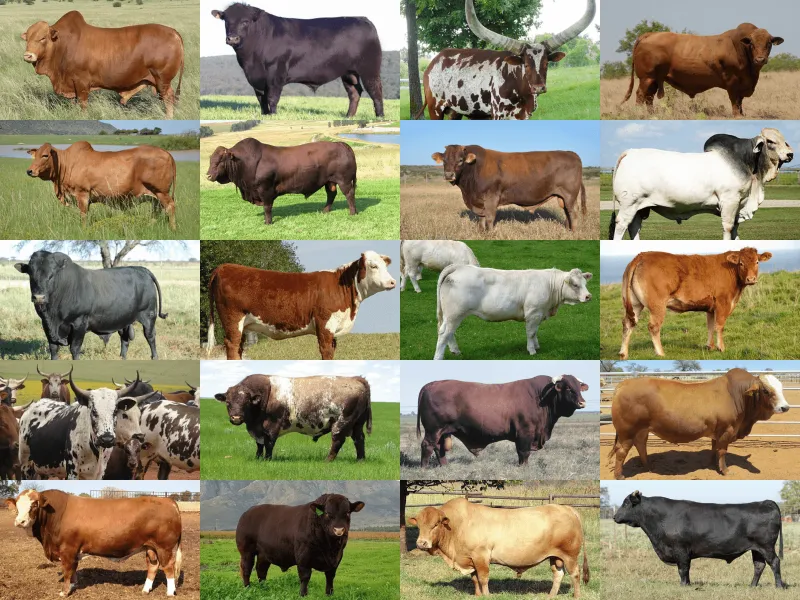
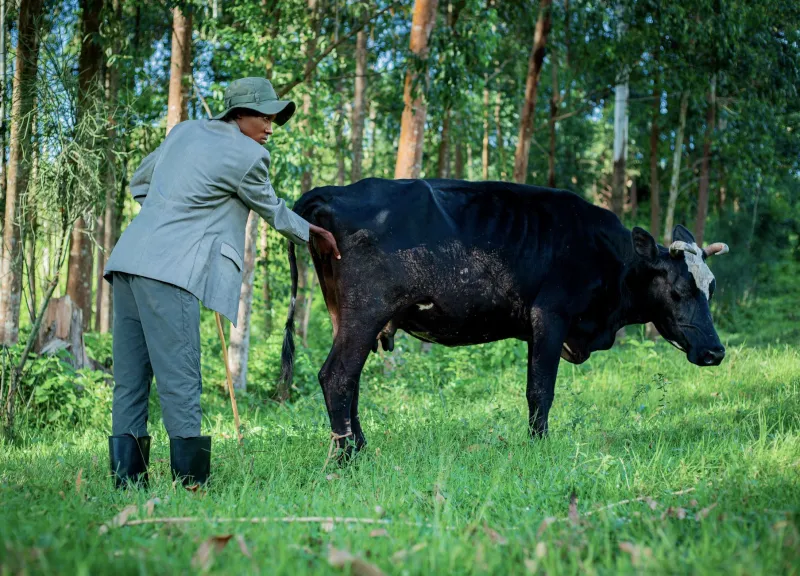
Photo: cattle rancher evaluating herd in pasture selective breeding, via beefmaster.co.za
Every serious cattleman understands the value of a high-performing cow. She weans a heavy, uniform calf. She breeds back on schedule. She holds condition through drought and winter stress without demanding extraordinary inputs. She is, in short, the kind of animal that justifies the entire enterprise.
What receives far less attention — and far less honest accounting — is the animal standing just below her. Not the obvious cull. Not the open cow or the chronically poor doer. The middle-tier animal. The one who weans a calf that is acceptable but not exceptional. The one whose daughters populate your replacement pen year after year, quietly inheriting and perpetuating her limitations. The one who, on any given day, looks fine.
She is costing you more than you likely realize. And across a decade of breeding decisions, she may be costing you more than any single purchase you have ever made.
Why Average Is Not Neutral
There is a common assumption in ranch management that a cow who pays her own way is a cow worth keeping. The logic is understandable — she is not losing money, so why remove her? The problem with this reasoning is that it treats cattle production as a static exercise rather than a compounding one.
Genetics do not simply persist. They multiply. A below-average cow retained in the herd does not merely underperform once. She produces daughters who underperform. Those daughters produce their own daughters. Meanwhile, the feed, the pasture acres, the labor, and the veterinary resources consumed by each generation of mediocre genetics represent opportunity costs that never appear on a simple profit-and-loss statement but are very real nonetheless.
Consider a ranching operation in the southern Plains running 200 cows. If 40 of those cows — 20 percent of the herd — fall into a genuine middle tier, weaning calves that average 50 pounds lighter than the top performers while consuming equivalent inputs, the annual revenue gap is measurable and significant. At current feeder calf prices, that differential across 40 cows represents a substantial sum. Across ten years, accounting for replacement heifers retained from those cows, the compounding effect of that genetic drag can represent a six-figure opportunity cost that never appears on any single year's ledger.
Operations that have confronted this reality directly have documented profitability improvements of 18 to 27 percent over a ten-year period — not by spending more on elite genetics, but by becoming more disciplined about what they chose to remove.
Identifying the Middle Tier Accurately
The challenge with culling mediocre performers is that they are, by definition, unremarkable. They do not announce themselves the way an open cow or a structural problem does. Identifying them requires deliberate data collection over multiple production cycles.
Effective identification begins with consistent, objective records. Weaning weights adjusted for age of dam and calf age, body condition scores tracked across the production year, conception dates relative to the start of the breeding season, and lifetime input records per cow unit — these are the tools that separate genuine middle-tier animals from cows who simply had a difficult year.
A single below-average calf crop is not sufficient justification for culling a cow with otherwise strong records. However, a cow who consistently produces calves in the lower third of your contemporary group, who requires additional supplementation to maintain condition, or whose daughters demonstrate similar patterns — that animal represents a genetic liability that compounds with time.
The introduction of genomic data into this analysis has made identification considerably more precise. EPD profiles that consistently fall below your herd's own averages for economically relevant traits, particularly weaning weight, maternal milk, and heifer pregnancy, provide objective confirmation that a cow's genetic contribution is subtracting from rather than adding to your program's trajectory.
The Replacement Heifer Trap
One of the most consequential ways that genetic mediocrity compounds is through replacement heifer selection. Operations without strict selection criteria frequently retain heifers from their most available females rather than their most meritorious ones. When middle-tier cows represent a significant portion of the cowherd, they inevitably contribute a disproportionate share of the replacement pool simply by virtue of numbers.
This creates what might be called a genetic ceiling effect. Each generation, the herd's average is anchored by the daughters of cows who were never exceptional to begin with. Even when superior bulls are used consistently, the maternal genetic base limits how much improvement actually transfers to the next generation's performance.
Ranchers who have broken this cycle report that it requires two to three breeding cycles before the full benefit of tighter culling standards becomes visible in weaning weight averages and conception rates. The investment in patience is real. So is the payoff.
Practical Culling Standards Worth Adopting
For operations looking to implement a more rigorous approach to removing marginal genetics, several practical thresholds are worth considering.
First, establish a weaning weight floor adjusted for your specific environment and management system. Any cow who fails to wean a calf above that threshold in two consecutive years — absent documented extenuating circumstances — should be evaluated for culling regardless of her other attributes.
Second, apply a maternal contribution standard to your replacement heifer selection. If you are retaining heifers from your cowherd, set a minimum requirement that their dams rank in the top 60 to 65 percent of the herd on a composite index of economically relevant traits. This single discipline, applied consistently, compresses the genetic range of your replacement pool and accelerates improvement across generations.
Third, assign an honest dollar value to pasture space. Every acre occupied by a below-average cow is an acre unavailable to a superior one. When culling decisions are framed in terms of carrying capacity opportunity cost rather than simply the individual animal's performance, the economics of removing marginal performers become considerably more compelling.
The Patience Required — and the Reward
It would be misleading to suggest that aggressive culling of middle-tier animals is without short-term cost. Reducing the cowherd to remove marginal genetics means fewer calves in the near term. It may mean purchasing replacements from outside the operation while your own replacement pool improves. These are genuine expenses that require planning and, in some cases, access to capital.
What the ranchers who have committed to this strategy consistently report, however, is that the compound effect of genetic improvement is real and durable. A herd whose genetic floor has been raised — not just whose ceiling has been elevated by a premium bull — performs more consistently, requires fewer inputs per unit of output, and generates more predictable revenue across varying market conditions.
At LH Cattle Co., we have observed this pattern repeatedly in the operations we work with. The ranchers who build lasting profitability are rarely the ones chasing the highest-priced genetics at every sale. They are the ones who maintain the discipline to remove what is holding them back, year after year, generation after generation.
The math of genetic improvement is patient. It rewards those who are equally so.